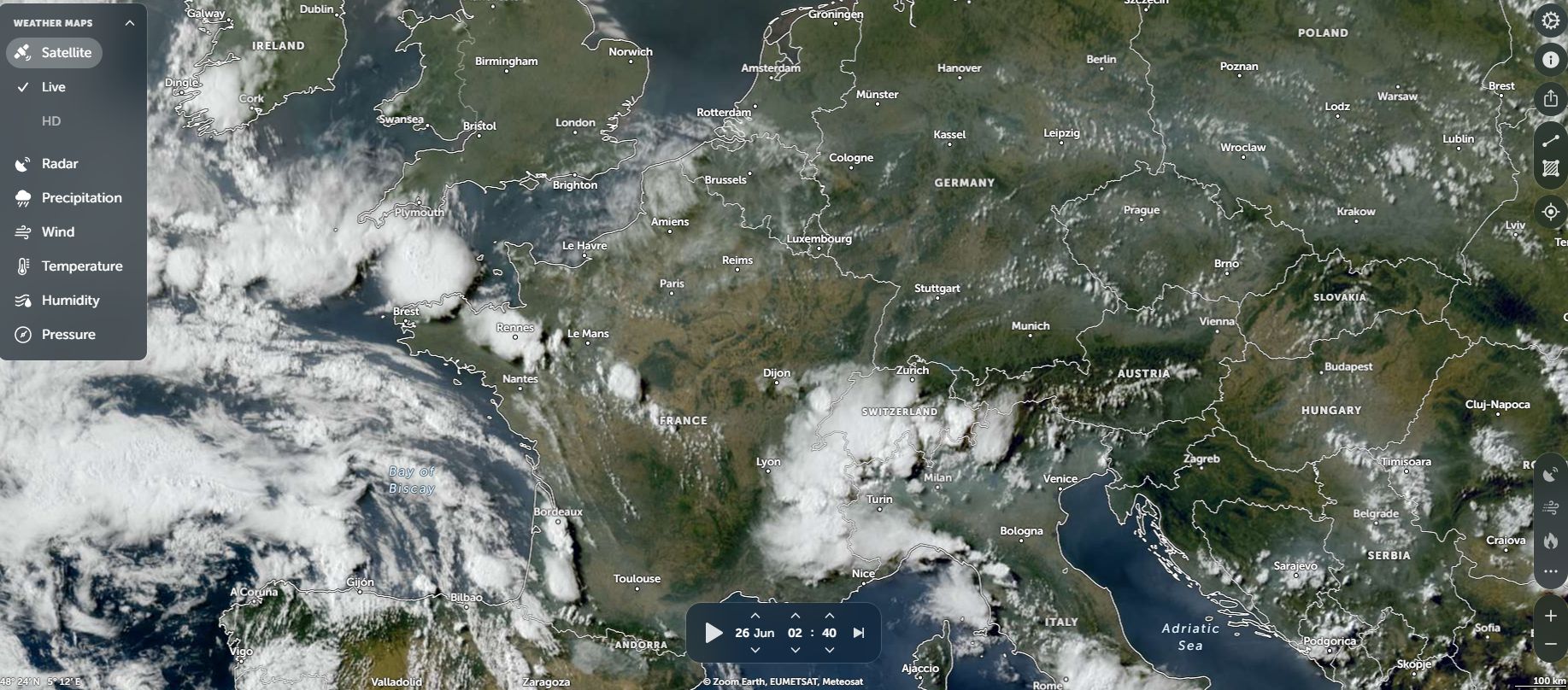
The satellite picture NASA Zoom Earth (Feature Image) of Friday afternoon 26 June 2026 shows a broad expanse of Western Europe and most of the United Kingdom under clear skies.
The same image also shows a cluster of thunderstorms engulfing much of the Alps over northern Italy, Switzerland and southeastern France. Another cluster of thunderstorms lie within an area of northwest France (Near Brest) but to the south of England.
This is the region that has been experiencing a strong heatwave over the past 3 to 4 days which has seen maximum daytime temperatures reach into the low 40s and even approaching the mid 40s at some isolated locations. Such heat is comparable to the type of heat that would be expected during any given summer across Australia each year.
It appears that intense heat has lasted for a period of 3 to 4 days across some regions.
This is not as long as what could occur in Australia (Compared to the 7 day heatwave of late January 2026 across inland New South Wales) but it is significant in terms of duration and strength given location.
Central and northern Europe are not locations that would normally experience such levels of heat.
A review of the Met Office website (United Kingdom) identifies that a “Red Warning” alert for extreme heat was issued for a period of 3 days covering Wednesday to Friday. The heat is now abating but maximum temperatures for June has topped 37C at Santon (Downham).
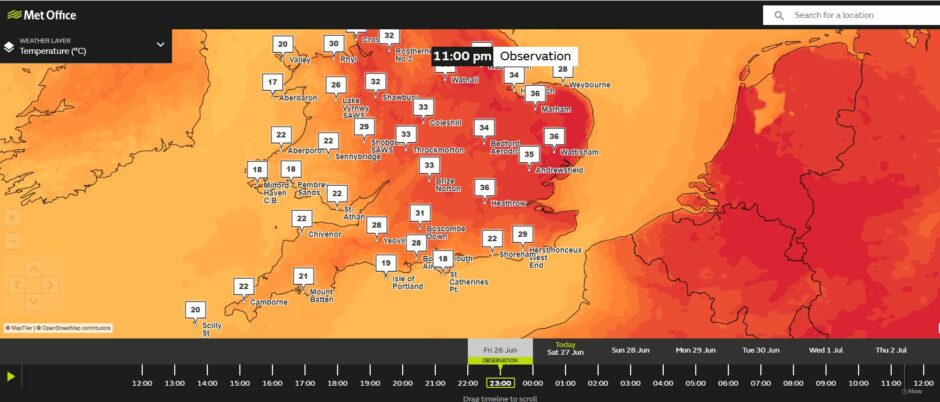
On the 24 June 2026, a temperature of 36.1C was recorded at Gasport in Hampshire which exceeded the previous UK maximum of 35.6C recorded on the 28 June 1976 at Southhampton.
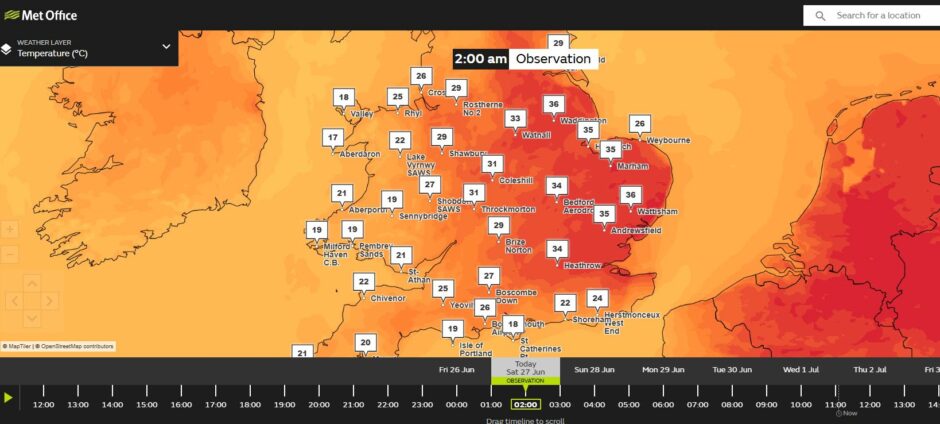
Minimum overnight temperatures have also been impressive for England in which a new minimum June record occurred being 23C at Plymouth during the current event.
Friday’s temperature extremes for England include:
- 37.3C at Santon (Downham).
- 36.9C at Caningsly (East Midlands).
- 36.4C at Heathrow (London).
- 35.2C at Normanby Hall (Yorkshire).
During Thursday (Bute Park) Cardiff reached 35.9 which is impressive given that Cardiff is located in Wales.
When looking at the temperature plots for England, it is identified that such temperatures are mostly limited to the southeast and south but inland away from the coast.
It has been much cooler further north and along the west coast.
France and Continental Europe
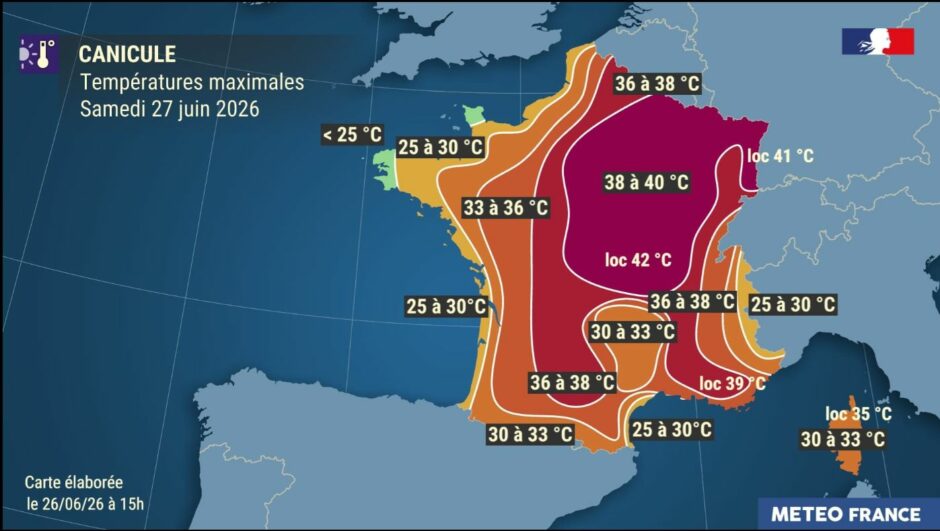
Much of France has experienced the same event but maximum daytime temperatures have been much higher due to location. Maximum daytime temperatures have reached:
- 44.3C at Pissos (Landes) on June 23.
- 43.8C in Palluau Verdee on June 24.
- 43C in Les Herbiers on June 23.
- 40.3C in Paris on June 24.
During Friday, the maximum daytime temperatures included:
- 41.5C at Boviolles (Meuse).
- 40.6C at Puttelange Les Thionville Moselle
The worst of the heat has occurred throughout the inland regions and across regions that usually do not experience such temperatures. This is typical of what is expected in Australia during most summers. It is made worse because most homes across the region are not designed or built for such events and the use of air conditioners is rare.
It is also understood that at least 40 people have died across France from drownings as residents sought any place possible to cool off.
The heat has also spread into adjacent countries such as southern Germany and Italy.
The dome of heat is slowly tracking east and it is now cooling down across England and France.