Hurricanes impacting the Hawaiian island chain are exceptionally rare but when they do occur, they are exceptional and newsworthy events.
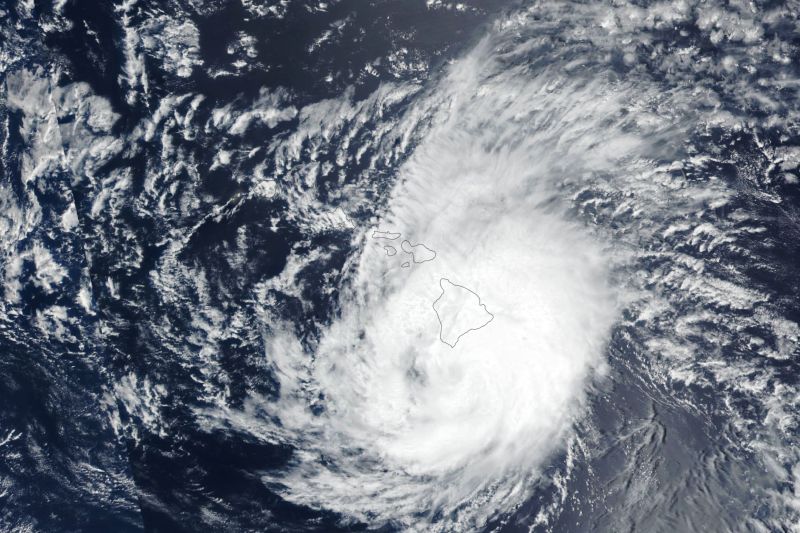
Hurricane Lala made such a close approach to the Big Island of Hawaii on Saturday August 15 and Sunday August 16 that had it crossed the coast and made landfall, it would have become the first such storm to do so since 1871.
Lala has only become the fifth hurricane since 1957 to pass within 110 km of the Big Island joining:
- Hone – 2024.
- Douglas – 2020.
- Iselle – 2014.
- Kanoa – 1957.
The eyewall of the storm passed just to the south of the main island as a Category 1 system on the Saffir Simpson Scale with peak winds of 120 to 130 km/h at its closest point.
The storm brought incredible rainfall exceeding 500 mm at 15 locations across the big island including 1,106 mm at Laupahoehoe. (Northwest of Hilo).
The Big Island is dominated by two massive shield volcanoes that tower over 4,000 metres in elevation. As such, blizzard conditions were experienced on the summit of Mauna Kea. Snow fell across the higher elevations of Mauna Kea and wind gusts topped 225 km/h across the summit area.
The storm brought flooding, storm surges and landslides and cut power to around 220,000 residents across the island.
The storm impacted other islands of the island chain in the form of heavy rainfall and wind gusts such as a peak gust of 119 km/h occurring at Olowalu on Maui.
Hurricane Lala benefitted from the water waters of the Pacific Ocean and the resultant El Nino event.
Following its close approach to the Big Island, the storm weakened below hurricane strength but as it traversed further to the northwest away from the island chain, the storm re intensified becoming a Category 3 and even a low end Category 4 storm on the Saffir Simpson Scale by August 19. By August 20 and 21, the storm interacted with colder waters and weakened sharply.
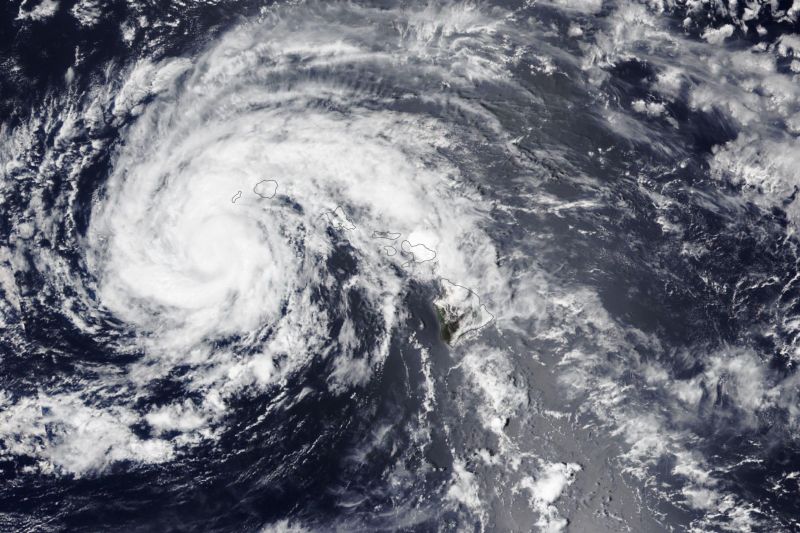
The images attached to the post from NASA “Image of the Day” – NASA Earth Observatory taken on August 15 and 16 shows the storm at its closest approach to Hawaii (Source – VIIRS data NASA EOSDIS LANCE on the Suomi Satellite.


