Back in August 2023, I took the opportunity to get close to Indonesia’s most active volcano and successfully witnessed small eruptions including lava dome collapses at or below the crater summit early morning.
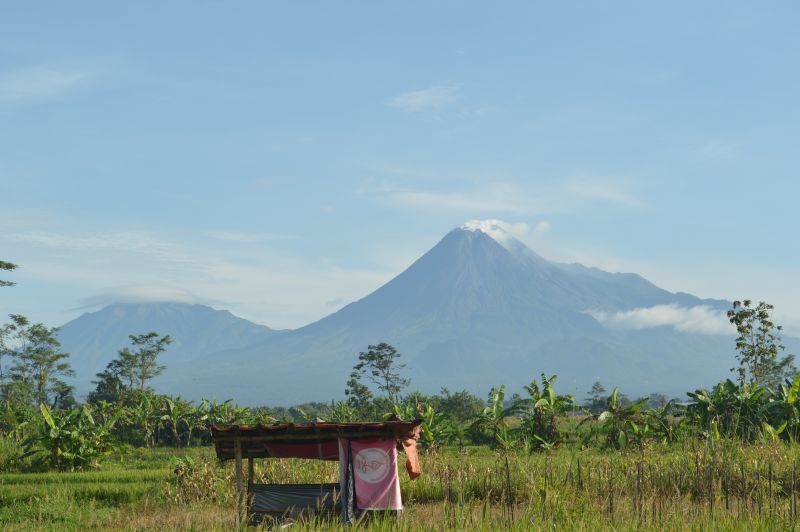
A statement at Extreme Storms titled “Gunung Merapi (Indonesia) - An attempt to catch a thunderstorm and volcanic eruption July 25 2023” is available for reading to show my first attempt at catching one.
I am attempting to catch a volcanic eruption which produces a thunderstorm complete with lightning strikes and flashes. This is common across Indonesia whenever there is a major volcanic eruption due to the country’s location on the Pacific Ring of Fire.
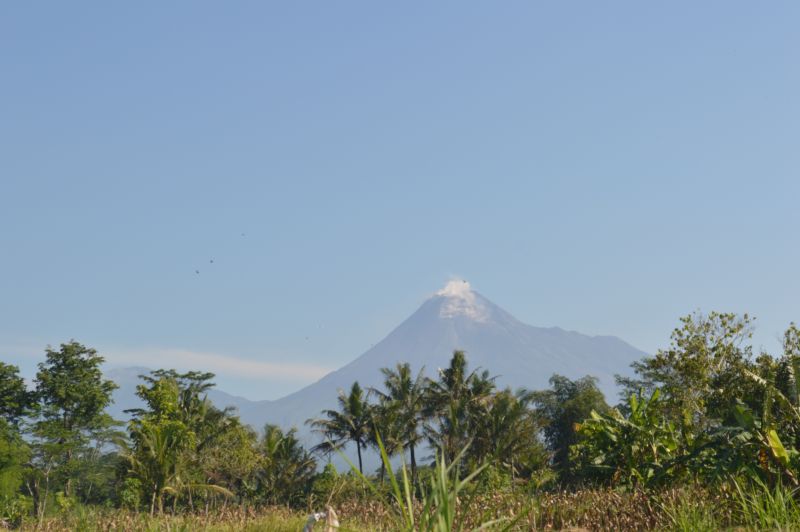
Gunung Merapi (Yogyakarta) is no exception when it comes to this phenomenon as such behaviour is well and truly documented.
To do this, regular trips need to be made to the base of an active volcano or strato volcano and one needs to stay in the area for a period.
Such eruptions when they do occur are often short lived and a person needs to be at the location when they occur. However, when such eruptions do occur, they can be spectacular but extremely dangerous if a person is too close.
Such an eruption occurred at nearby Gunung Semeru to the east on November 19 and again on December 21 which was well documented by media outlets.
It appears that I am on the right track in trying to catch a thunderstorm and a volcanic eruption as this time during December and into January 2025 / 2026, Gunung Merapi appeared to be more active and a few minor eruptions did in fact occur. I successfully caught a lava dome collapse including a pyroclastic flow across the upper southern slopes of the volcano.
After 11 am on December 27, there was a full eruption at Merapi which was partially hidden by cloud and light rain. The pyroclastic flow generated made the local TV news bulletin. The flow approached the base of the volcano before dissipating quickly.
Early January 2026, I had the opportunity to go to Teras Merapi, a park situated directly below the summit and within approximately 4 km of the summit (The closest possible permitted approach that can be made to the volcano). Here I observed plumes of gases emanating from the active lava dome.
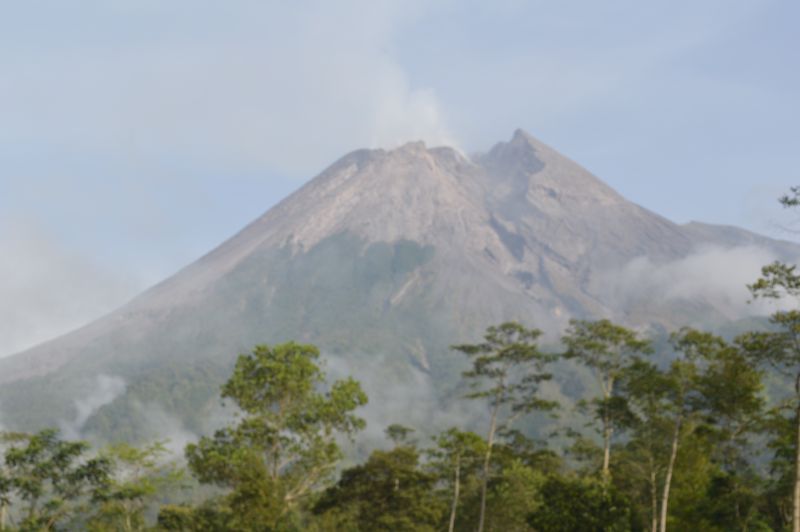
Then on the night of Monday 5 January 2026, I witnessed a night time eruption complete with a pyroclastic flow and a lava flow. The images from my mobile phone are crude and not the best but one can see a lava flow below the summit. I am 10 km from the summit in Sleman. The fact that my mobile phone picked it up is impressive in itself over such a distance.
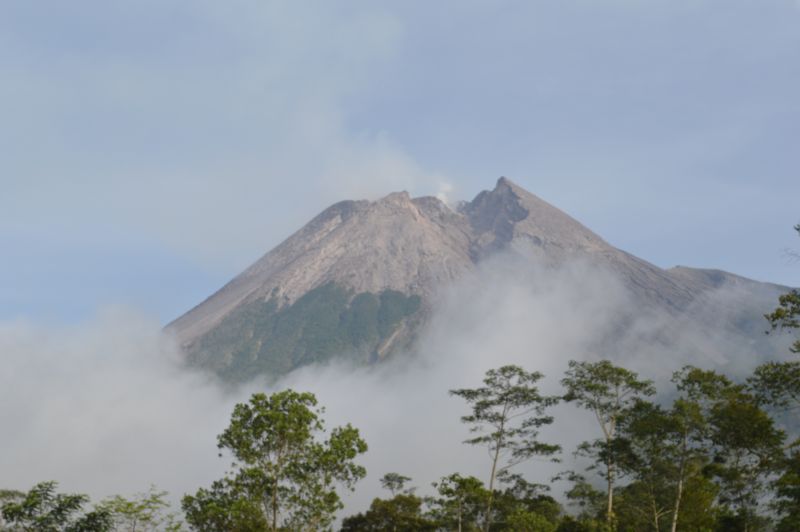
I did not observe any lightning from this but this would have been interesting had this occurred during daylight hours. This is the first time I have seen and captured such activity. This is also the first time, I have witnessed a solid lava flow cascading down an active volcano.
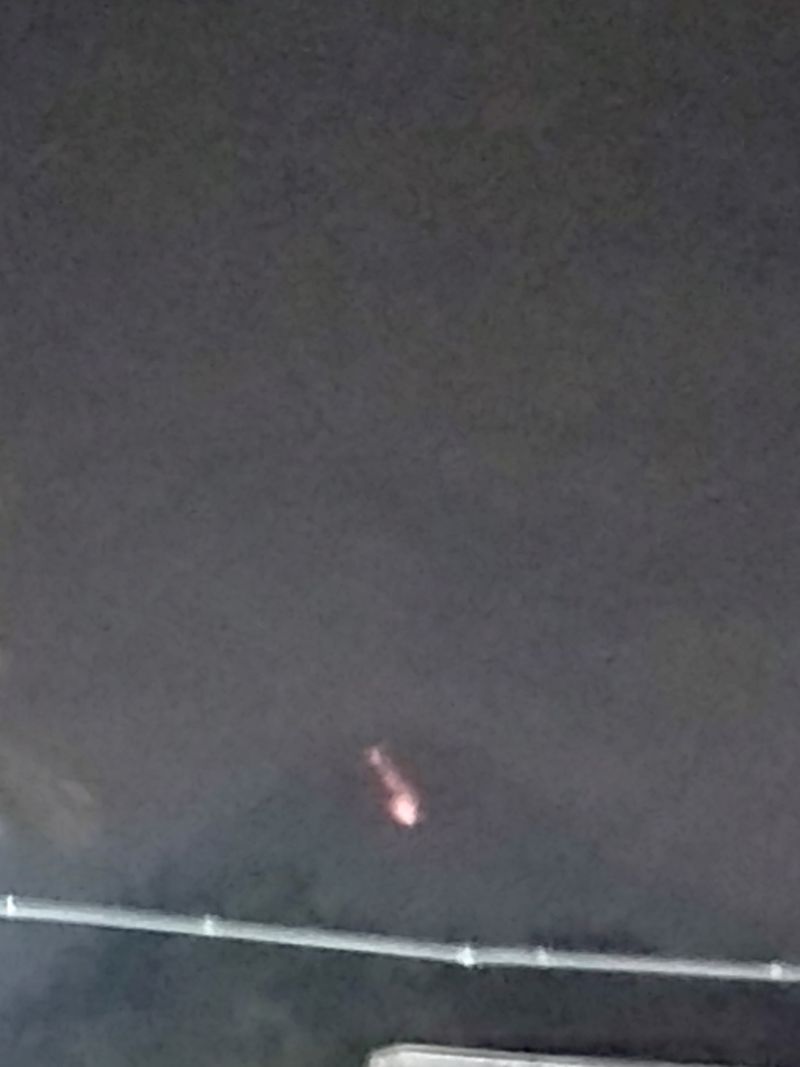
This shows that I am on the right path to catching a volcanic eruption that generates a thunderstorm. Given that I will have to return to Yogyakarta in the near future, another opportunity will present itself again to catch one.
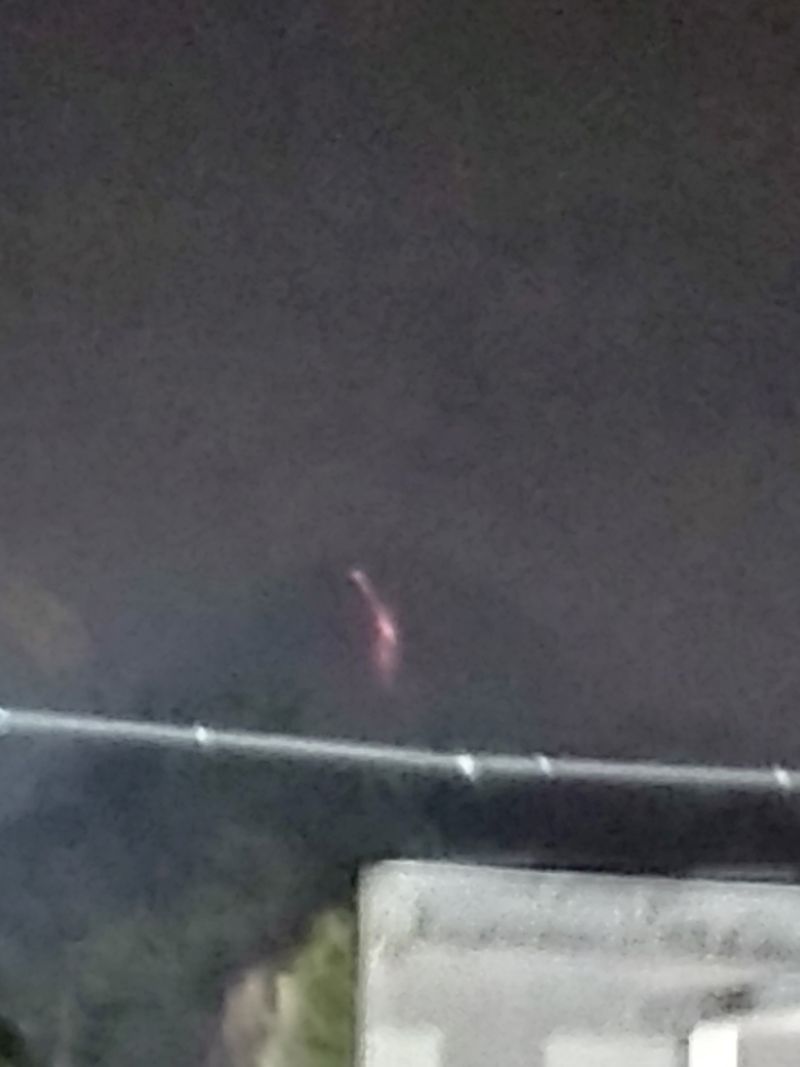
Merapi is Indonesia’s most active volcano and is currently at Level 3 in terms of activity. There is also an exclusion zone surrounding its base due to the dangers of an eruption.
Most eruptions that occur here are often within the range of VEI 1 to VEI 3 but every 10 to 15 years, a larger eruption can occur. Given that a large eruption occurred during 2010 (I believe it rated VEI 4), the period December and January 2025/26 was a good opportunity to return to this volcano and yes, I noted an increase in activity when compared to my earlier visits.
The photos of Merapi were all taken during December 2025 and early January 2026 as part of this ongoing project.